Sanskrit and South Asian Manuscripts digital engagement SIGN-POSTING
June 2026
The Bodleian Libraries are building on the recent project to digitize 100 manuscript works from their world-class collection of Sanskrit and related South Asian manuscripts to further enhance the collection’s accessibility with new “Sign-Posting” content. Both initiatives have been made possible through benefactions from the late John P. Clay, an alumnus of the University of Oxford and founder and benefactor of the Clay Sanskrit Library (CSL).
The new project will see experts commissioned by the Bodleian, including those based at the University of Oxford, create a series of digital storytelling outputs which share the stories and themes found within its collection. This new content will provide engaging “Sign-posts” directing web browsers to the newly-digitized Sanskrit and related South Asian manuscripts. The new resources will enable these historic materials to be accessed and enjoyed by an even wider audience, including many people who may be unfamiliar with such works.
The visual digital “Sign-post” stories created may explore themes including:
- An overview of the Bodleian Sanskrit collections – highlighting ‘star’ objects
- A look at the different written and language Sanskrit traditions, including some of the oldest items in the Bodleian’s collection
- Sanskrit play and drama traditions
The new “Sign-Posting” content created will be made accessible via links from the Clay Sanskrit Library (CSL) to the Bodleian Libraries newly dedicated webpages, and the stories will be released as they are created over the two-year duration of the project.
While the work with the Sanskrit digitized manuscript storytelling is progressing, a webpage which focuses on the Selden Map, a treasure from the Bodleian’s Maps collection, available at: Map https://exhibitions.bodleian.ox.ac.uk/bodleian/selden-map-of-china provides an illustration of similar content created by the Libraries.
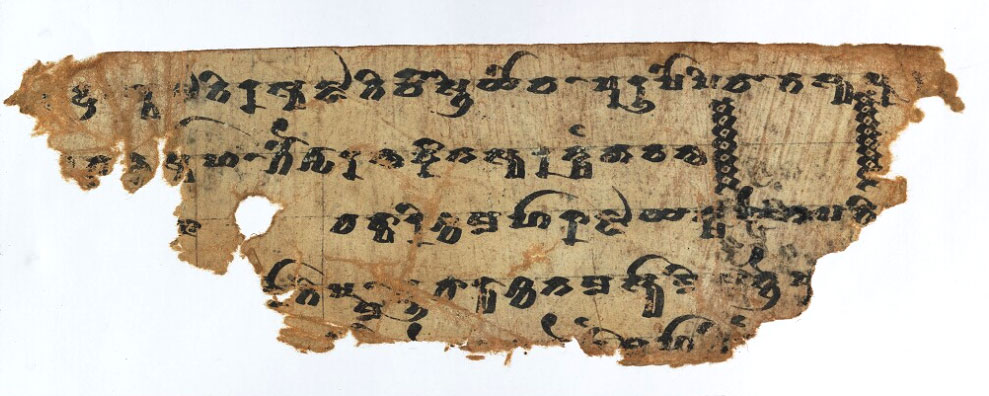
The Weber manuscript: one of the earliest Sanskrit manuscripts written on paper and shows one of the earliest scripts – the Gupta script – as Sanskrit moved from an oral tradition to be written as well.
The Bodleian Libraries Sanskrit and South Asian Manuscript Collection
The Bodleian is proud to be the repository of some 8,700 Sanskrit manuscripts, the largest known collection outside the Indian subcontinent. From the first South Asian acquisitions gifted by Archbishop William Laud between 1635 and 1640, the manuscript collection expanded through donations in the 19th century (including the personal library of Horace Wilson, the first Boden Professor of Sanskrit), and a donation of over 6,000 manuscripts by the Prime Minister of Nepal, the Maharajah Sir Chandra Shum Shere, in 1909.
In 1927, the library’s Sanskrit manuscript collection was further enriched when the Indian Institute Library, which had been founded by the second Boden Professor of Sanskrit, Sir Monier Monier-Williams, came under Bodleian management.
The collection spans approximately 1,000 years of the continent’s cultural heritage, and covers every branch of Sanskrit literature. It also includes a smaller number of manuscripts in Tamil, Prakrit, Marathi, Pali and other Indic languages.
Read more about the Bodleian’s collection of Sanskrit and South Asian Manuscripts.
Read more about the Clay Sanskrit Library.
Click here to read The Science of Elephantology
and learn about the myth and reality of elephants in premodern India
(exhibit will open in a new tab)
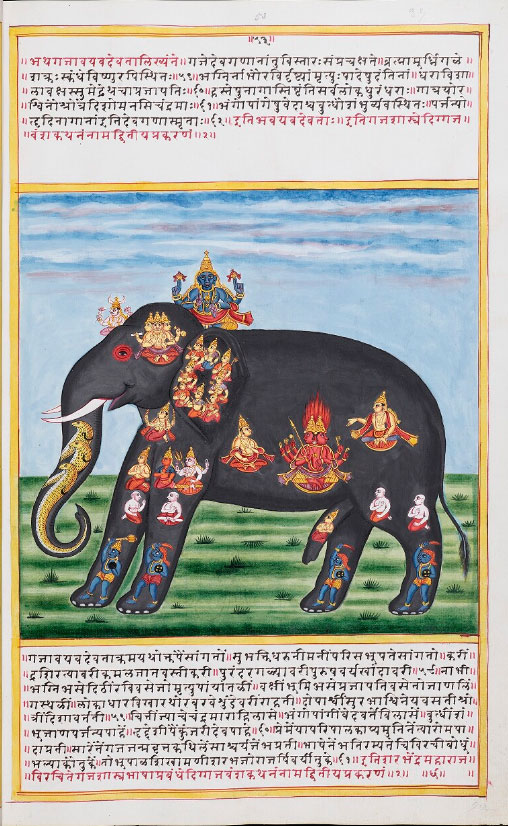
This richly illuminated manuscript is one of the Bodleian Library’s greatest treasures. It is an illustrated copy of Pālakāpya’s Gajaśāstra, dating to 1874 – 1878 CE, a Sanskrit treatise on the care and management of elephants. It explores the myth and reality of elephants in premodern India.
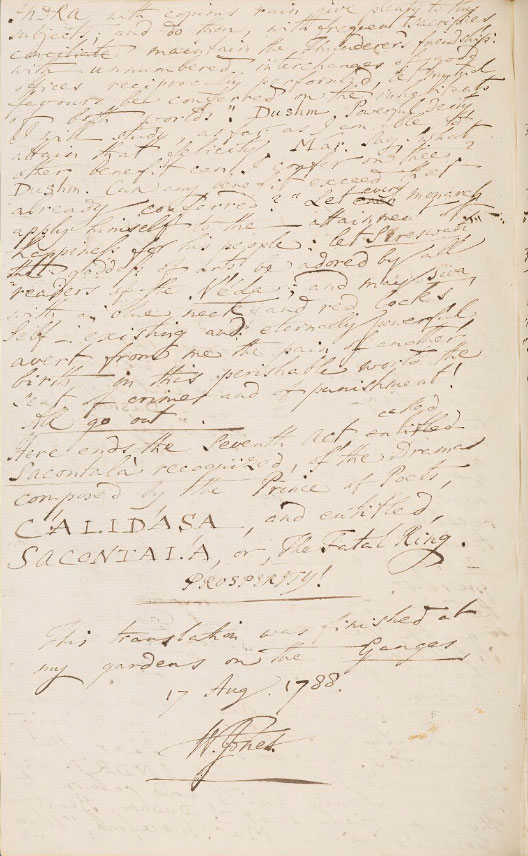
This translation of the Śakuntalā, by Sir William Jones shows his translation work mapping Sanskrit to Greek to English. This working document led to an English translation of Śakuntalā published in 1789. It swiftly published into German and soon it was everywhere in European intellectual life inspiring Goethe and Schubert amongst others.